On Learning Bird Names
Before I knew the names, the wren was still there but simply part of the wider soundscape. After, it was a particular, a non-general, a someone. And that small shift invited me to linger a moment, and enjoy its company. The name was the introduction, the beginning of a relationship.

Hello Good Lookers,
It's Menka here with Noticing from Just Looking — a nudge to slow down and stay curious about the everyday and the ordinary. Over the summer I decided to learn the names of all the birds that live in my garden, as an exercise in attention. An attempt to feel more connected, and more alive! (TLDR - it worked.)
Community News - photowalk this Saturday
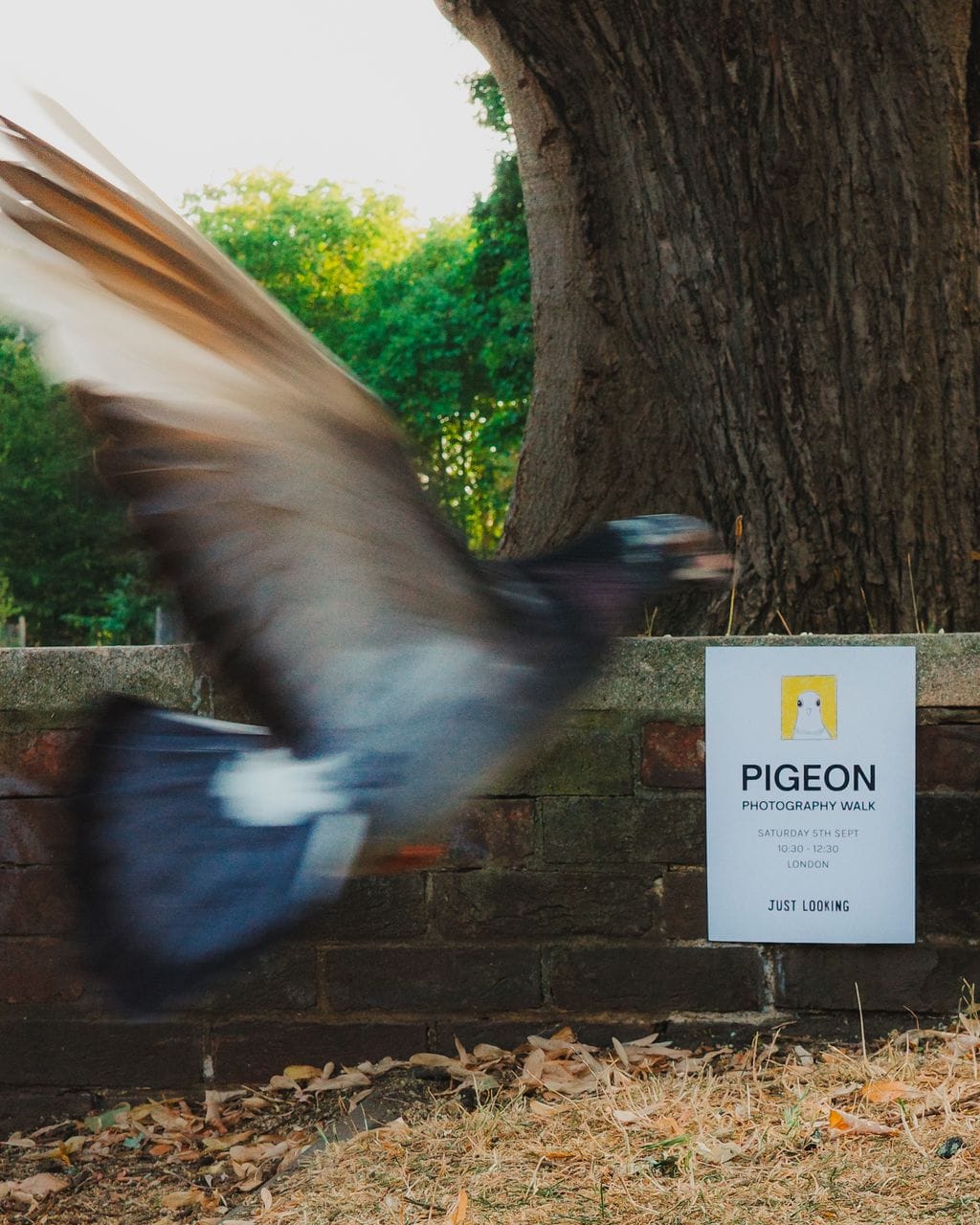
First, a quick one for the Londoners among you. This Saturday 5th Sep we're hosting a mindful photography walk at St Paul's, turning our cameras on the city's most overlooked resident: the pigeon. I'm in the middle of writing a Just Looking book about pigeons, and I can promise you these birds are fascinating. Best of all we'll be joined by Billy Holt, a historian of the London pigeon, who will come armed with wonderfully wild pigeon facts alongside the history of how human attitudes towards columba livia have changed over the last two centuries.
What's In A Name?
Over the summer I've been power-using an app called Merlin, which listens to your surroundings and tells you which birds are singing. It flags each name as the call comes in, so you learn them by ear. After a while it stops being a process of identifying birds and starts becoming a habit of listening out for familiar voices, and noticing any changes in texture, cadence and pitch.
It felt like a whole neighbourhood I'd been walking past for years had finally introduced itself — and what a bunch. The Eurasian wren: tiny and yet packing a punch with a bold song far bigger than its body. The rose-ringed parakeet: forever late for something important, streaking past like the White Rabbit in Alice. The Great Spotted Woodpecker: the easy-going one, self-assured, in no rush, happy to hang about while everyone else flaps.
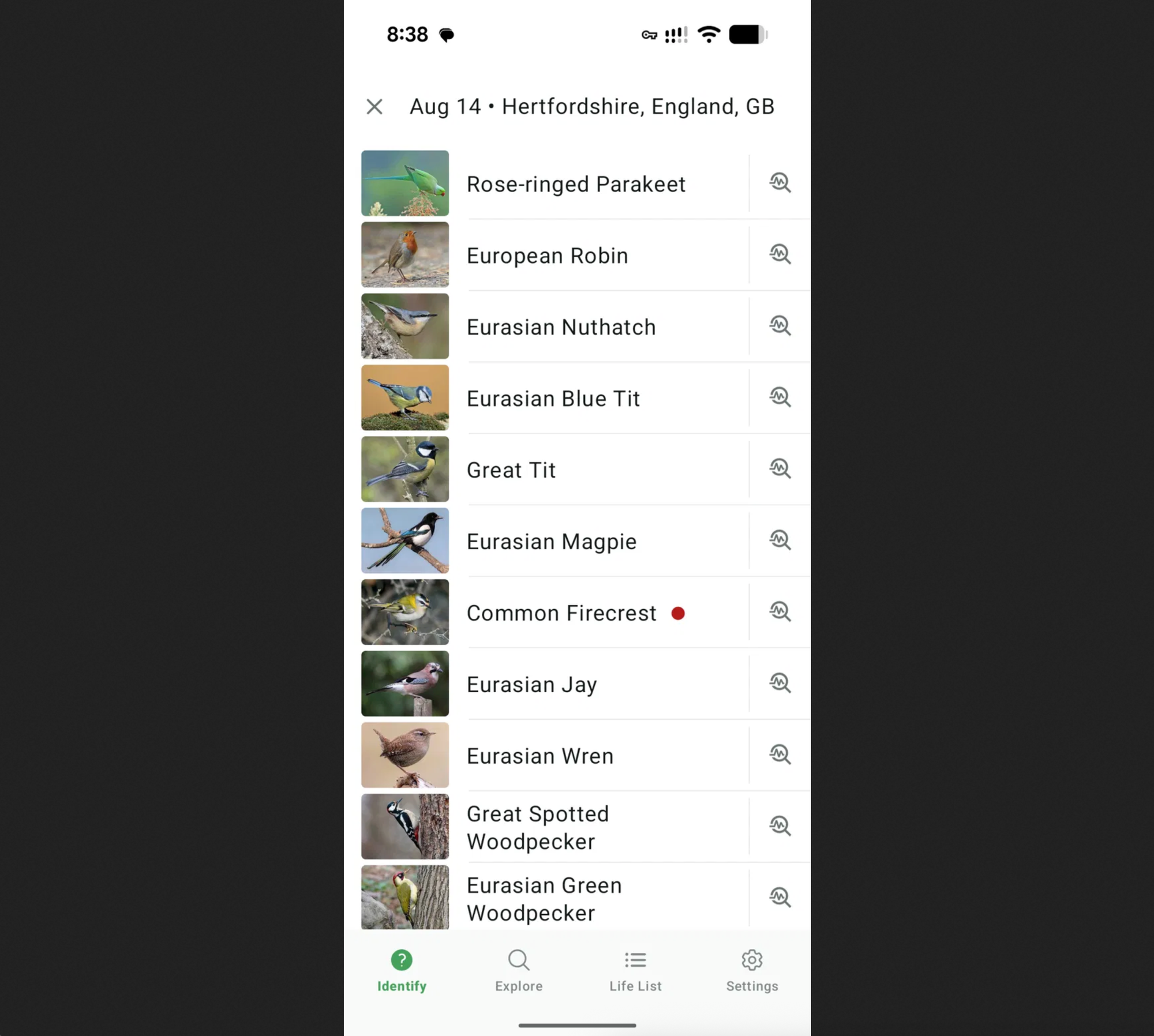
Thankfully, the names were just the beginning. Before I knew the names, the wren was still there but simply part of the wider soundscape. After, it was a particular, a non-general, a someone. And that small shift invited me to linger a moment, and enjoy its company. On some mornings I'd hang the laundry out a little slower. Other times I'd be rushing for the train but still tune into the birds along the way. That's the best thing about slowing down — it doesn't have to take longer.
The naturalist David Haskell in his beautiful essay "Listening to the Language of Birds" calls listening to other species "the original augmented reality." By noticing their sounds and patterns we expand our reality. For free, without any screens. Layers and layers of meaning and connection available to anyone who wants it.
“When bird language entered my life, I felt that a new sense had been grafted into me. Bird voices opened a fresh dimension of sensory experience. This expansion drew me into stories of my home in unexpected ways, revealing ecological rhythms and connections, stimulating my curiosity, and suffusing me with a sense of belonging.”
As I research new bird names, I'm reminded of how in Genesis, the very first task given to the human isn't to build or conquer — it's to name the animals, as if naming were the founding act of being in relationship with the living world.
Robin Wall Kimmerer, botanist and member of the Citizen Potawatomi Nation, calls this "the grammar of animacy". In her book Braiding Sweetgrass she points out that in English we'd never call our grandmother it, yet we say it of a tree, a river, a bird without blinking. To refer to someone as who rather than what is to let them back into the family. Into life's community.
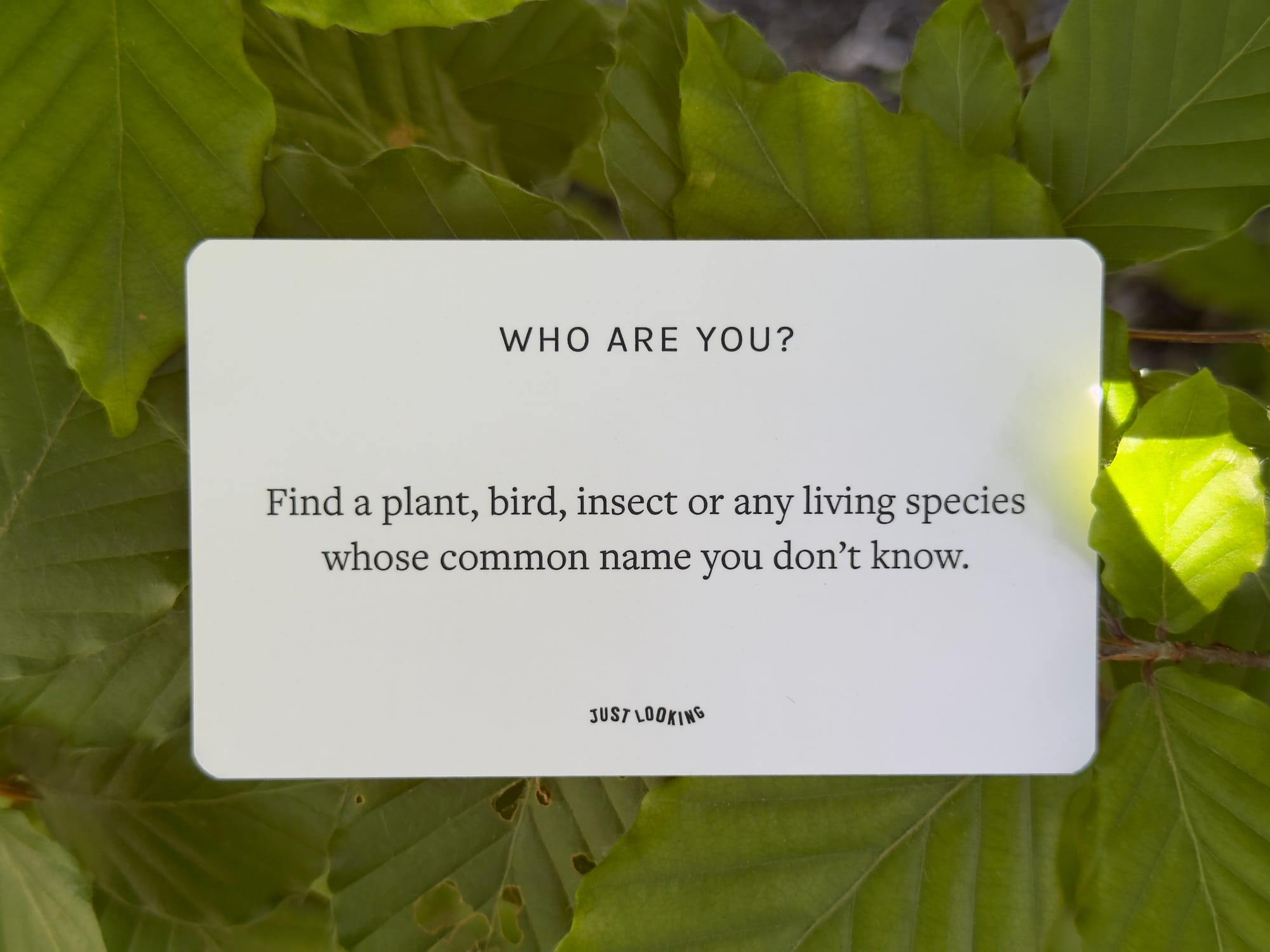
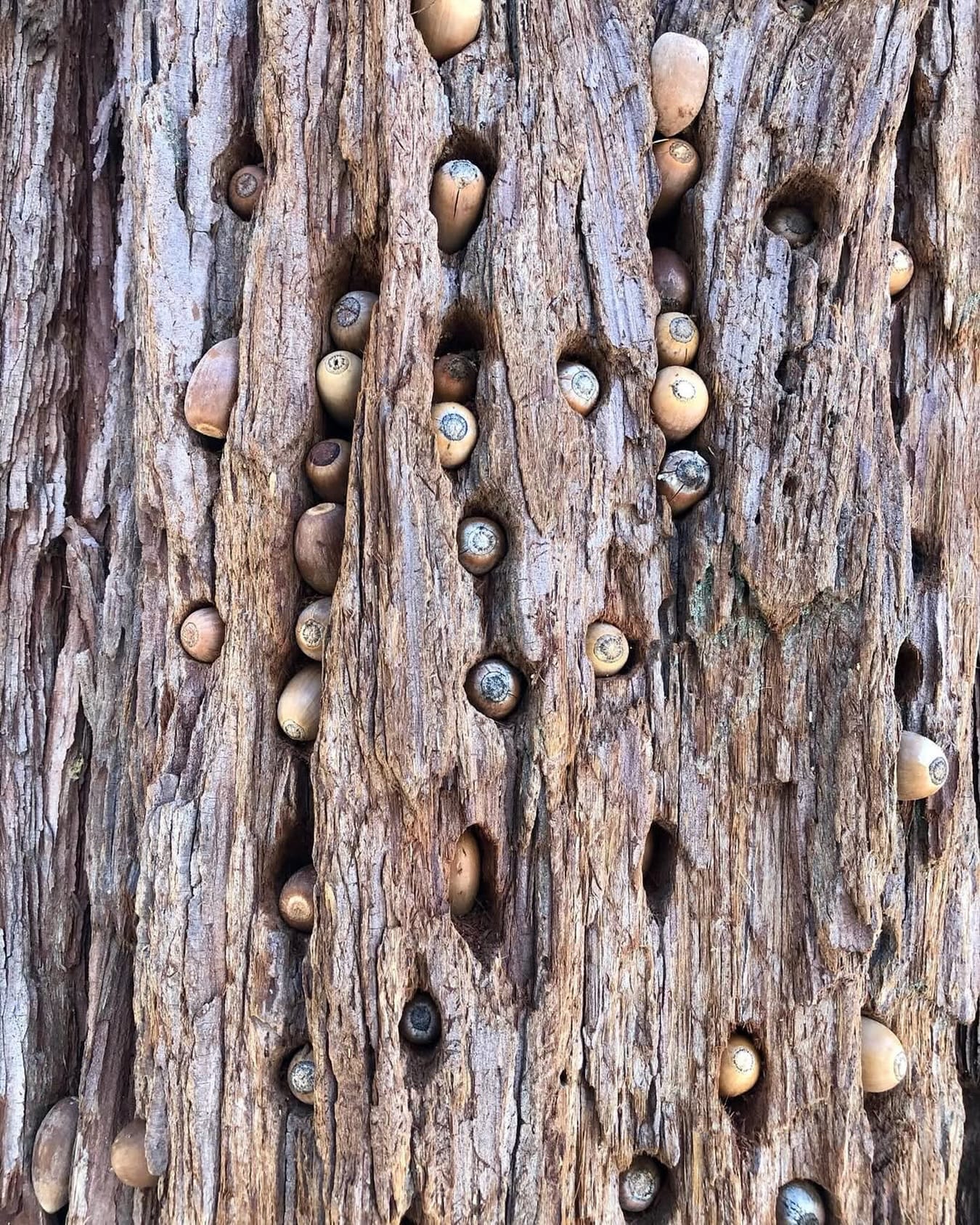
The card above is from our Just Looking pack, 60 Experiments in Looking. But as I was searching for that card in the pack I came across another experiment that read almost like a warning. "No Caption: look at something without thinking about the words you might use to describe it." I've found that this practice of dropping names can be powerful too. Once the initial charm of knowing a name wears off, and I can shout out "Great Tit!" the moment they chime in, I might stop wondering how they're feeling, or what they're actually saying. Autopilot kills curiosity.
Ursula K. Le Guin wrote a lovely short story called "She Unnames Them," in which Eve goes around returning all the names Adam had given the animals, handing them back, until the boundary between her and the other creatures dissolves and she feels closer to them than ever.
“None were left now to unname, and yet how close I felt to them when I saw one of them swim or fly or trot or crawl across my way or over my skin, or stalk me in the night, or go along beside me for a while in the day. They seemed far closer than when their names had stood between myself and them like a clean barrier…”
This makes sense, and reminds me that closeness doesn't actually come from the naming, or unnaming, but the attention, and the humility behind the question, "Who are you?" But, for now, I'm still delighting in all the introductions.
👀 Experiment
So here's our experiment for this time - learn a name. Go and meet someone new: find a bird, a plant, a bug whose name you don't know, and learn it — Merlin for birdsong, or something like Seek for the rest. Google Lens is powerful too, but it doesn't pull you into a curiosity rabbit hole in the same inspiring way as the intentional, non-profit nature apps. My ask is simply to take a moment to research what you're looking at, eyes back up, say hello properly, and notice if it feels any different.
It's been such a long while since I last wrote. I would love to hear from you if you try the names experiment, or just reply to say hello! And if you're in London this Saturday, maybe cancel your plans and join us for a collective practice in looking.
Yours in curiosity,
Menka
→ Tell someone about Noticing.
→ Check out our shop.
→ Join the Friends of Just Looking!

Noticing – Our Newsletter
Join our newsletter community for monthly inspiration to slow down and stay curious about everyday life and what matters most to you.